


FINAL FANTASY IX for Android
SQUARE ENIX Co.,Ltd.
FINAL FANTASY IX is the kind of adventure game I would recommend to someone who wants a substantial, story-led role-playing experience rather than a quick phone distraction. This Android release brings one of Square Enix’s most characterful journeys to a touchscreen, and its biggest strength is still the same: it combines a playful fantasy world with surprisingly thoughtful writing about identity, friendship, responsibility, and the fear of being forgotten.
I approached it less like a casual mobile game and more like a compact console-style adventure that happens to work on a phone. That distinction matters. You are not buying a short collection of levels designed for five-minute sessions. You are committing to a long journey with exploration, battles, equipment decisions, towns to revisit, and a cast that gradually becomes more important than the opening comedy suggests. When the game clicks, it feels unusually rich for Android. When it does not, the age of the design becomes difficult to ignore.
A classic adventure that earns its place on a phone
As an adventure game from SQUARE ENIX Co.,Ltd., this version is built around a traditional role-playing structure. The story moves through a colorful world, and the party develops through battles, equipment, abilities, and discoveries. I like that the game does not treat its fantasy setting as a simple backdrop. The locations have their own mood, the characters react differently to danger, and the tone can shift from light comedy to genuinely serious drama without abandoning its distinctive visual style.
The opening hours are deliberately theatrical. They introduce a group of characters with different personalities and motivations, then use their contrasting reactions to keep the journey moving. The result is more inviting than a grim, heavily technical role-playing game. I found it easy to become interested in the cast before understanding every detail of the world, which is a smart way to handle a large story on a mobile screen.
Its average rating sits at 4.2 from around twelve thousand ratings, while the game has passed one hundred thousand installs. Those figures do not replace personal experience, but they do suggest that this is not an obscure experiment or a bare conversion. It has attracted a meaningful Android audience despite its premium price and older design.
Related News






The price is $20.99, so I would not describe it as an impulse purchase. That cost makes more sense for someone who already knows they enjoy classic role-playing games or who specifically wants this adventure on Android. If you only want a free game for occasional tapping, there are easier choices. Here, the value comes from the amount of story and the feeling of owning a complete premium experience, not from an endless stream of daily rewards.
Why the cast carries the experience
The strongest evidence that this game still works is its character writing. The party is not assembled simply to fill combat roles. Each member brings a different emotional problem, and the journey gradually tests those problems instead of resolving them immediately. I especially appreciate how the game lets personality show through dialogue, reactions, and small changes in behavior rather than relying only on dramatic speeches.
That approach gives the adventure a warmer identity than many darker fantasy games. It can be funny without becoming disposable, and it can be sentimental without constantly demanding that the player cry. The visual presentation supports this balance. The world is expressive and often charming, but the story is willing to ask serious questions underneath the bright surfaces.
Gallery
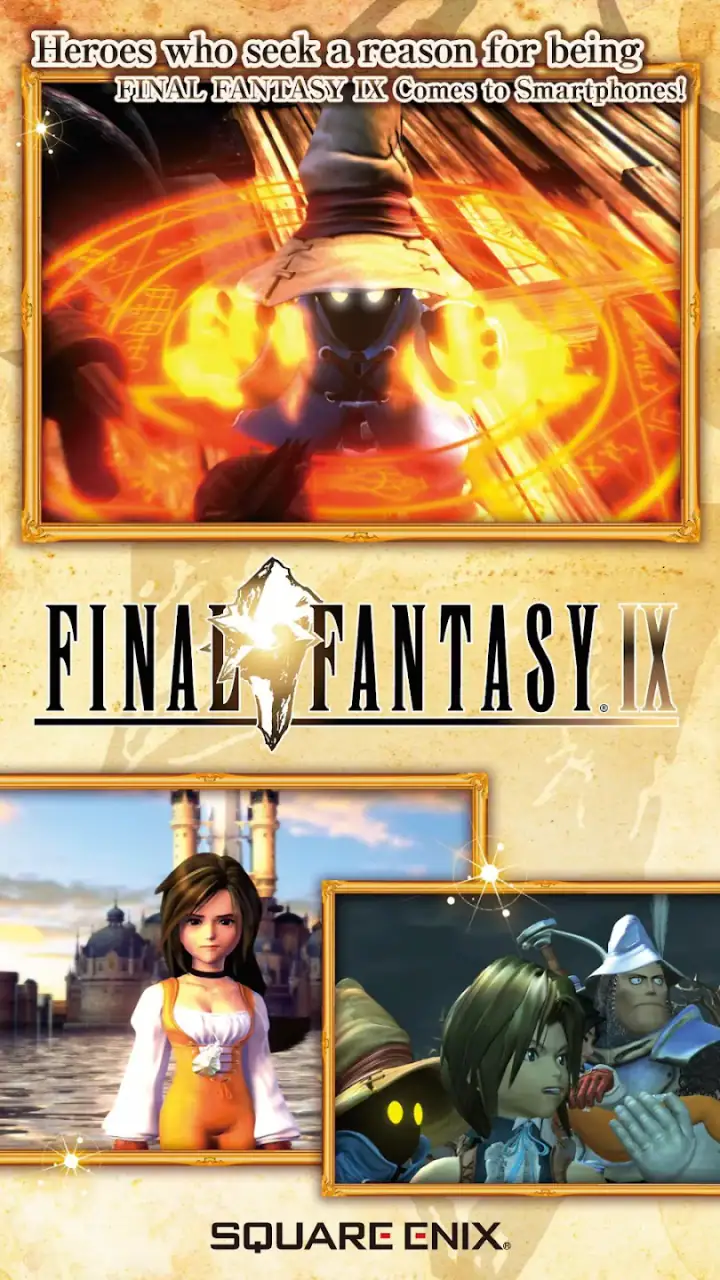
For me, the most rewarding way to play is to avoid rushing through the main path. Towns and travel spaces are not merely corridors between battles. Paying attention to conversations can clarify relationships and make later events land with more weight. I also recommend keeping a simple mental note of unresolved character concerns. The game returns to emotional threads over time, and remembering them makes the party’s development feel more coherent.
There is a useful trade-off here. The story is accessible enough for a newcomer, but its impact is stronger if you are willing to accept a slower pace. Players who skip dialogue, rush from objective to objective, or treat every scene as something to get past will miss much of what makes this particular Final Fantasy memorable.
How the role-playing systems reward attention
The combat is turn-based, which gives me time to think instead of demanding quick reflexes. That makes it a comfortable fit for a phone, especially when I am playing in a quiet setting and want to make deliberate decisions. The challenge is not only about selecting the strongest attack. Party composition, equipment, abilities, and the situation in front of you all influence whether a battle feels controlled or unexpectedly dangerous.
One of my practical recommendations is to treat equipment as more than a way to increase basic power. New gear can affect the abilities available to a character, so equipping something immediately and selling or ignoring older items can be shortsighted. I prefer to inspect what each item teaches or enables before deciding what to keep. This creates a small inventory puzzle: the strongest-looking piece is not always the most useful one for the next stretch.
That system also encourages experimentation. A character may be valuable because of a particular ability rather than raw damage, while another may become more effective when prepared for a certain type of encounter. I found that rotating equipment and checking ability options made progression feel more personal than simply accepting automatic upgrades.
A second useful habit is to save before entering unfamiliar areas or committing to a major story sequence. This is not because the game is constantly unfair, but because classic role-playing design can be less transparent than modern mobile adventures. A little preparation reduces frustration, particularly if you have not yet learned which characters and abilities suit your preferred style.
The game also benefits from patience during battles. Repeatedly choosing the same command may work against ordinary enemies, but tougher encounters expose weak preparation quickly. I get better results by identifying what each party member is contributing, preserving useful resources, and adjusting when a straightforward attack is not solving the problem.
The mobile interface is workable, not transformative
Touch controls are the area where my enthusiasm becomes more qualified. Moving a character with a virtual control is serviceable, but it does not feel as precise as a physical controller. In narrow spaces or around objects, I sometimes find myself making small corrections that would be effortless with buttons. This is manageable, yet it reminds me that the game was not designed around modern phone ergonomics.
Menus are more comfortable because turn-based play gives me time to select commands. I can pause mentally, review choices, and continue without the pressure found in an action game. For that reason, I would choose this title on a phone over a fast platformer or a precision-heavy adventure. The slower combat softens the limitations of touch input.
Screen size also affects the experience. On a larger phone or tablet, the environments and dialogue are easier to appreciate, while a small display can make the older visual presentation feel busier. I would strongly favor a larger screen if you plan to read for long sessions. The game remains playable on a standard phone, but comfort depends on how much space you have for movement, menus, and text.
Another practical point is session length. The story is easy to follow in short bursts, but the emotional rhythm works better when I can give a scene enough uninterrupted attention. A commute can be useful for grinding or handling routine travel, while major story sections deserve a quieter session. That division lets the mobile format help rather than turning the whole adventure into fragmented reading.
Where the older design shows its age
The meaningful weakness is not the story; it is the friction around that story. This is a traditional role-playing game with older pacing conventions, and some sections take longer than a modern mobile player may expect. Random encounters, backtracking, repeated menu work, and stretches of travel can make progress feel slower when I am playing without a controller.
I also think the game asks for more patience than many current Android adventures. Modern alternatives often explain objectives clearly, automate routine actions, and streamline equipment management. This release expects me to pay attention, remember locations, and make decisions without always presenting the most convenient path. That can be satisfying when I want depth, but it can feel like unnecessary work when I only have a few minutes.
The combat system has a related limitation: its pace can become repetitive during ordinary encounters. The strategic layer is more interesting when enemies demand a response, but weaker battles may feel like interruptions between story scenes. I would not recommend playing every fight manually if your main goal is to see the narrative quickly. On the other hand, skipping the system entirely would mean losing part of the game’s progression and preparation loop.
The premium cost makes these issues more important. At $20.99, I expect to spend time with the game, not sample it briefly. Someone uncertain about classic Japanese role-playing games should think carefully before buying. The price is easier to justify if you value a complete, story-focused experience and are comfortable with older conventions.
Who should play it, and who should choose something else
I think this is a strong fit for players who enjoy party-based adventures, turn-based combat, expressive fantasy worlds, and stories that give characters room to change. It is also a good choice for someone who wants a game that can be played offline-style in spirit: there is no need to chase a daily routine or compete with other players to make progress. You can return when you have time and continue the journey at your own pace.
It suits a particular everyday scenario well. Imagine having a long train ride, a quiet evening, or a weekend where you want one substantial game instead of several disposable ones. You could use short sessions to improve equipment and handle ordinary battles, then reserve a longer block for story-heavy sections. That pattern feels natural here because progression is divided between exploration, preparation, and dramatic scenes.
I would be more cautious about recommending it to someone who wants immediate action, constant novelty, or a game built around very short rounds. It is also not ideal if you dislike reading dialogue or managing character development. The game’s appeal depends on caring about the party and accepting that the adventure sometimes takes the scenic route.
Compared with free-to-play role-playing games, this is less convenient but more focused. You are not being pulled toward recurring tasks, competitive systems, or a rotating reward structure. Compared with newer premium adventures, it offers a stronger sense of classic party storytelling but less modern comfort in movement and pacing. Compared with action-oriented fantasy games, it gives up reflex-based excitement in exchange for planning and narrative attention.
That comparison helped me decide when to recommend it. If a friend wanted a relaxed, story-rich game for a tablet, I would point them here before suggesting a frantic action title. If they wanted something to play with one hand while distracted, I would suggest a simpler game instead. This is a title that rewards being present.
Android details worth considering before buying
The game was released on February 9, 2016, and its current version is 1.5.4. It requires Android 6.0 or later, so compatibility should be straightforward for many devices, but I would still check the phone or tablet you plan to use before purchasing. The age rating is Teen, which fits the combination of fantasy conflict, serious themes, and dramatic situations.
Because this is a premium purchase, I would decide in advance how you intend to play it. A controller can make movement more comfortable if your setup supports one, while a tablet can improve readability and reduce menu fatigue. Neither changes the underlying design, but both can make a meaningful difference over a long adventure.
I also recommend resisting the urge to over-optimize from the beginning. The game is more enjoyable when I understand the party naturally, try different equipment, and let the story introduce its ideas at its own pace. A guide may help if you become stuck, but consulting one for every decision can turn discovery into a checklist. The best balance is to use outside help only when confusion becomes more frustrating than rewarding.
Before committing, ask yourself whether you want a complete narrative or a constantly updated service. That single question is more useful than comparing screenshots. This Android release is designed to be experienced as a finished journey, and its value rises with the amount of time you are willing to give that journey.
My verdict after settling into the journey
The best reason to choose this game is its combination of personality and depth. It has a cast I wanted to understand, a world that feels more imaginative than functional, and a progression system that rewards paying attention to equipment and abilities. The touch interface is not perfect, and older pacing can test your patience, but those drawbacks do not erase the quality of the adventure underneath.
I would recommend it to a friend who wants a serious premium role-playing game on Android and is happy to play at a measured pace. I would also explain the limitations honestly: movement can feel awkward, ordinary battles may become repetitive, and the $20.99 price demands genuine interest rather than curiosity alone.
For the right player, FINAL FANTASY IX is more than a nostalgic name on a phone. It is a thoughtful, character-driven adventure that still understands how to make a long journey feel personal. Choose it when you want to settle into a world, make deliberate choices, and follow a party through emotional change. Skip it when you need instant action or a frictionless mobile routine. My overall opinion is positive, with one clear condition: give it your attention, and it gives you far more back.
FAQs for FINAL FANTASY IX for Android
What is FINAL FANTASY IX about on Android?
FINAL FANTASY IX is a classic role-playing game that follows Zidane Tribal, Princess Garnet, Vivi, and their companions as they become involved in a conflict threatening the world of Gaia. The Android version preserves the original story, turn-based battles, exploration, character development, and memorable theatrical presentation, making it suitable for players who enjoy traditional, story-focused Japanese RPGs.
Does FINAL FANTASY IX for Android work offline?
After the initial installation and any required game data have been downloaded, FINAL FANTASY IX can generally be played offline, which is convenient for travel or areas with limited connectivity. An internet connection may still be needed for the first download, updates, license verification, or restoring purchases. It is recommended to install the game while connected to stable Wi-Fi before starting your adventure.
Is FINAL FANTASY IX free to download on Android?
FINAL FANTASY IX is normally a premium Android game rather than a completely free-to-play title. You may need to purchase it before accessing the full adventure, and the store price can vary depending on your region, promotions, or publisher discounts. The premium model usually means the main game does not depend on energy systems or constant advertising, but check the current Google Play listing for exact pricing.
Does the Android version include the complete FINAL FANTASY IX experience?
The Android release contains the complete core FINAL FANTASY IX campaign, including its main storyline, party-based combat, exploration, equipment systems, abilities, and optional activities. It also includes mobile-oriented features such as selectable enhancements that can make progression easier or faster. These options are useful for newcomers, although players seeking the original challenge can choose to experience the game more traditionally.
What devices and controls are recommended for FINAL FANTASY IX?
Because FINAL FANTASY IX is a substantial 3D role-playing game, performance can vary between Android devices. A relatively modern phone or tablet with sufficient storage and an updated operating system is recommended for smoother loading and fewer compatibility issues. Touch controls are available, but an external controller may feel more comfortable during longer sessions, especially when navigating menus and exploring large areas.
Pros
- Faithful port of a beloved classic RPG
- Deep story with memorable characters and themes
- Turn-based combat is easy to learn
- Large world with many optional quests
- Playable offline after installation
Cons
- Touch controls can feel awkward during precise actions
- Some menus and text appear dated on modern screens
- Random encounters may become repetitive
- The full adventure requires a paid purchase
- Performance can vary on older Android devices


